
Sports
Terry Rozier Investigation Throws NBA Trade Rules into Spotlight — What It Means for Miami Heat, Charlotte Hornets and the League
Dec
1. A Stunning Arrest and Its Fallout
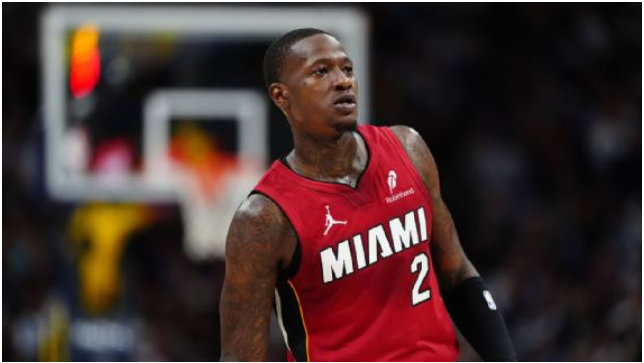
On December 8, 2025, the NBA world was rattled when Terry Rozier — guard for the Miami Heat — was formally arraigned in federal court in Brooklyn, facing charges tied to an extensive illegal sports-betting scheme. According to the indictment, Rozier allegedly played a pivotal role in tipping off bettors that he intended to leave a 2023 game early while playing for the Charlotte Hornets — information used to place large “under” bets on his performance. Prosecutors claim those bets netted illicit gains.
Despite a prior internal investigation by the league after suspicious betting patterns, the NBA concluded there were no violations. Still — as the legal situation has now escalated — questions swirl about the timing and thoroughness of due diligence.
Rozier pleaded not guilty, and was released on a $3 million bond — with his passport surrendered, travel restricted, and prohibited from gambling or contacting co-defendants.
But beyond the courtroom drama, this case has sparked another conversation: Should the pre-trade disclosures and protocols in the league have been stricter? And if so, who bears the responsibility — the former team, the acquiring team, or the league itself?
2. What Happened: The Trade That Should Have Raised Flags
When the Heat acquired Rozier from the Hornets on January 23, 2024 — in exchange for guard Kyle Lowry and a protected 2027 first-round pick — they did so under the assumption that everything was above board. At that time, the NBA had reportedly not informed Miami about any federal investigation.
As provided by league rules, all parties participating in a trade must disclose key information: contractual, medical, and insurance-related — specifically anything that could prevent a player from performing. The NBA’s trade-confirmation call is meant to highlight red flags.
In Rozier’s case, there were no medical red flags. And legally, at that moment, the league had found no wrongdoing internally. So, technically, the trade met the formal requirements. But in retrospect, many argue that federal inquiries into sports-betting schemes — even if unproven — should qualify as “material information.” Several executives reportedly described the situation as a “gray area.”
As one official told ESPN, disclosing an active investigation could open a slippery slope. What if the player is later exonerated? Would more teams be hesitant to trade for someone under scrutiny? Another warned: “Maybe as a matter of courtesy, you’d disclose it — but under the bylaws, it’s not required.”
3. Could the NBA Change Its Rules?
The Rozier case is resonating across NBA front offices. Several high-ranking executives told ESPN they expect the league to revisit its disclosure protocols — especially as legalized sports betting becomes more widespread nationwide.
Adding to the urgency, the league has historically evolved its transparency rules. For example, injuries used to be largely internal matters; now, injury reports are public and mandatory. The thinking: what once was private is now seen as material to competitive fairness and roster management.
But introducing mandatory disclosure of investigations (even unproven ones) raises thorny issues:
- Fairness to players: A player under investigation is not the same as a convicted wrongdoer. Publishing unproven charges could irreparably harm careers.
- Precedent & legal risks: If the league demands disclosure, should allegations — or any rumor — count as “material”? Could that lead to over-disclosure, or chill trades altogether?
- Due diligence burden on teams: Front offices would face enormous pressure to track external media reports, court filings, police databases — not just medical and injury info.
Given those complexities, some league insiders believe the NBA might stop short of making changes — even though many teams say they favor adjustment.
4. Impact on the Heat, the Hornets — and the Upcoming Trade Deadline
For the Miami Heat, the Rozier ordeal comes at a fragile moment. They acquired him to help make a deep playoff run. Now, with the guard’s legal status — and his suspension during court proceedings — the team faces new challenges. Internally, sources say Miami was irate when they first learned about the federal probe, arguing they should have been told.
One possible recourse: Miami could file a grievance with the league, arguing the trade should be rescinded or the first-round pick returned. On the table is the 2027 lottery-protected draft choice.
But multiple league executives consulted by ESPN believe the grievance has little chance of success. That’s because, strictly speaking, no rule was broken. And courts of precedent suggest the league—and its teams—often defer to the exact language of trade rules, not to what might be considered fair in hindsight.
Still — with the Feb. 5 trade deadline approaching — speculation is high about whether Miami will attempt to find a taker for Rozier. Some liken the situation to when another star (Kevin Porter Jr.) was arrested in 2023, then traded and immediately waived by his new team.
At the same time, any potential trade would almost certainly require league approval, especially given Rozier’s legal status and unpaid leave. And until those questions are resolved, it seems unlikely any team will assume the risk.
Broader Implications: Integrity, Transparency — and the NBA’s Future
The Rozier saga is more than a single court case. It’s a potential inflection point for how the league balances player rights, team interests, and competitive integrity in an era where legal sports betting is deeply woven into American sports culture.
- Integrity of the game: If players can allegedly profit by tipping off gamblers — even by leaving games early — it undermines public trust. The league must ensure the game remains fair, legitimate, and transparent. The Rozier case formally demonstrates how fragile that trust can be.
- Transparency & fairness in trades: Trades are foundational to the NBA. If teams don’t know all relevant information — legal, medical, personal — they can’t make fully informed decisions. Cases like Rozier’s bring into question whether the current trade-approval framework is comprehensive enough.
- Risk of chilling effect: On the flip side, if the league mandates disclosure of all investigations or legal issues, it could deter teams from making trades — especially involving younger players with less stable track records. That could stifle player mobility and competitive balance.
- Player rights vs. public interest: There’s a human dimension. Players are innocent until proven guilty; yet, once indicted, their careers and reputations can be damaged — regardless of the ultimate verdict. The league must balance discretion with accountability, but so far the rules don’t provide an easy path.
In the coming months, as Rozier’s court case unfolds and as the next trade deadline approaches, the NBA may be forced to choose: preserve the status quo, or confront a structural vulnerability in its trade and disclosure protocols.
5. Looking Ahead: What Happens Next — For Rozier, the Heat, and the League
- Legal proceedings: Rozier’s next court date is set for March 3, 2026. Until then, he remains suspended and on unpaid leave.
- NBA arbitration & salary implications: The league’s move to place Rozier on unpaid leave may face a grievance from the players’ association, who argue salary should continue unless he’s convicted. That arbitration — scheduled for December 17 — could influence whether Rozier eventually returns to the league.
- Potential trade action by Miami: With little on-court value now, the Heat may explore deals to offload his contract — but only if a buyer is willing to assume legal baggage and wait for clarification from the league.
- League-level regulation: The NBA must decide whether investigations — criminal, federal, or otherwise — will become mandatory disclosures during trades. A memo revising trade-call requirements could come soon, or the league might choose to maintain the status quo, leaving the burden on teams to self-police.
For fans and observers, the Rozier case is more than sensational headlines. It’s a test: Can the NBA adapt its rules and culture to a rapidly evolving sports-betting landscape, without compromising fairness — or anonymity, rights, and equal treatment?
From: Teetopiaworldus

